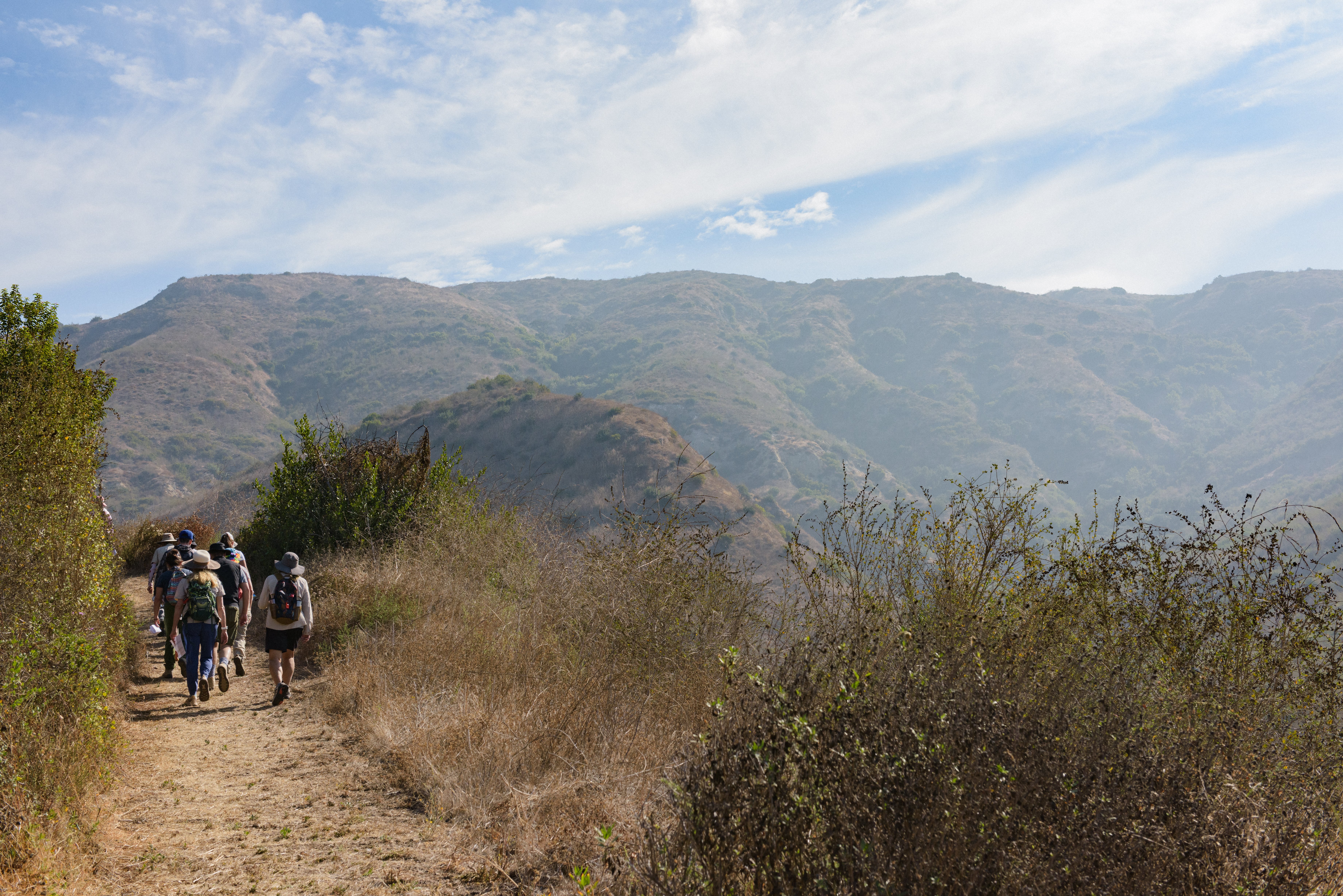
Stay safe on the land during heat advisories by choosing cooler hours, picking the right location, staying hydrated, and preparing for warm‑weather conditions to protect both yourself and the wildlands. #OCparks #HeatSafety 🌵🌞
What’s happening at Quail Hill? The City of Irvine and IRC Moving Forward with Habitat Enhancement Project

The Quail Hill loop enhancement project is underway! Whether you are a seasoned hiker or a first-time visitor, you may notice new activity happening along the loop as the City of Irvine has partnered with Irvine Ranch Conservancy (IRC) to plant native trees throughout Quail Hill Preserve. The improvements to one of Irvine’s beloved trails will span over a decade, with a plan to plant and maintain over 7,500 native trees on 245 acres.
This long‑term effort is part of the City’s Urban Forest Master Plan, which aims to increase native tree cover, especially across open space currently dominated by invasive grasses and weeds. Expanding the native tree canopy will improve habitat quality and boost biodiversity, which then leads to supporting wildlife. It also helps cool the landscape, strengthen its resilience to climate change, and enhances the overall experience for visitors exploring the Irvine Open Space Preserve.
To guide this work, three upland planting zones dominated by annual grasses have been identified as suitable for sustainable, non‑irrigated tree planting. These zones will feature native species such as Coast live oak (Quercus agrifolia), Mexican elderberry (Sambucus mexicana) and Laurel sumac (Malosma laurina). Because oaks grow slowly and require several years to establish, planting in these upland zones will take place during the first three years of the project.
A fourth zone, a naturally wetter area currently overrun by invasive broadleaf weeds, will be planted in years four and five. This area will be restored with riparian species including Sycamore (Platanus racemosa), Cottonwood (Populus fremontii), White alder (Alnus rhombifolia) and Willows (Salix spp.). To ensure the right species are selected for long‑term success, IRC collaborated with the California Native Plant Society to evaluate which native trees and large shrubs are best suited for large‑scale planting at the site.
Community involvement will play an important role in this effort. Opportunities for both trained volunteers and the public will be available to participate in tree planting and maintenance in the three upland zones as of now. Those interested can learn more at letsgooutside.org.
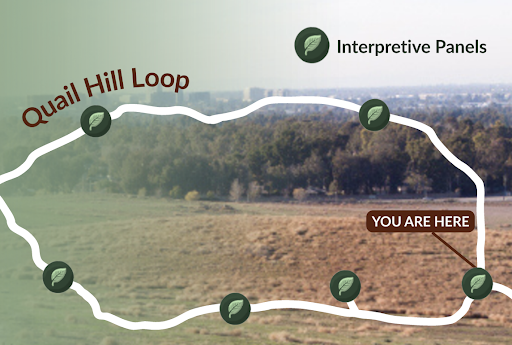
To help visitors understand the work taking place, interpretive panels have been installed along the popular Quail Hill Loop hiking trail, with more to come as the project progresses over the next decade.
As the community returns to the loop in the years ahead, Quail Hill will be growing alongside them. Native trees will mature, habitats will reconnect and wildlife will find new places to thrive. Each visit becomes a chance to witness, and be a part of, the restoration of our local landscape!
Related Posts