Stay safe on the land during heat advisories by choosing cooler hours, picking the right location, staying hydrated, and preparing for warm‑weather conditions to protect both yourself and the wildlands. #OCparks #HeatSafety 🌵🌞
Wildflower 101: How to View Nature’s Blooms

Each spring, wildflowers transform Orange County’s landscapes into vibrant displays of color. From golden poppies to purple lupine, these blooms are more than beautiful, they are actually essential to the health of local ecosystems, supporting pollinators, promoting biodiversity and stabilizing soil across the local wildlands.
Because wildflower season is short, and many flowers are sensitive and easily damaged, the way we enjoy these blooms during this short window can have long-term impacts, including whether they return year after year. Irvine Ranch Conservancy (IRC) encourages all visitors to follow a few simple dos and don’ts to help protect the places we love locally.
- DO: Stay on Designated Trails
- Wildflowers are extremely fragile. A single step can crush a plant before it has a chance to drop seeds for next year’s bloom. Staying on marked trails protects root systems, prevents soil compaction and preserves the plant for pollinators and wildlife.
- DO: Observe With All Your Senses
- Wildflower viewing is not just visual! Take in the scent of blooming sage, listen for bees moving from flower to flower and notice the variety of shapes, colors and textures of each unique flower.
- DO: Learn the Names of What You See
- Identifying wildflowers can deepen connection to the local wildlands. Common species you may see include California poppy, Arroyo lupine, Owl’s clover, Sticky monkeyflower and Black sage. Phone apps, interpretive signs and volunteer guides can help you learn as you explore.
IRC frequently uses the iNaturalist app, a free, easy‑to‑use tool that helps hikers identify plants, animals and even fungi while contributing valuable data to scientific monitoring and conservation across the Irvine Ranch Natural Landmarks.
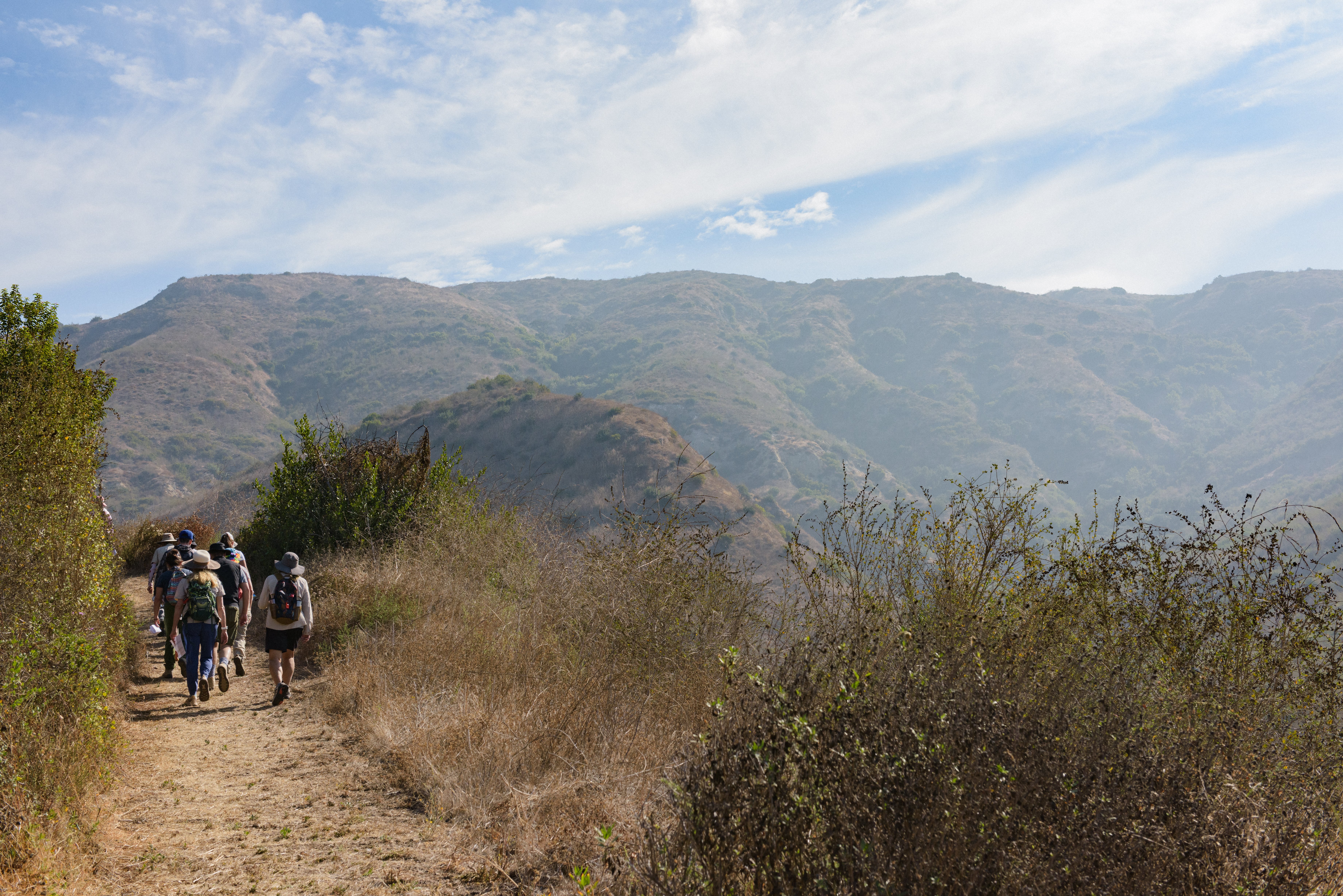
For those who prefer in‑person learning, IRC volunteers lead several wildflower interpretive hikes in OC Parks’ Limestone Canyon Nature Preserve throughout the season:
- May 9 – Slow-Paced Spring Wildflower Hike to Dripping Springs
- May 11 – Slow-Paced Spring Wildflower Hike to Dripping Springs
- June 13 – Slow-Paced Spring Wildflower Hike to Dripping Springs
- June 15 – Slow-Paced Spring Wildflower Hike to Dripping Springs
- DON’T: Step Into the Flowers for Photos
- Stepping into a bloom can destroy dozens of plants in seconds, just for a single photo. Instead of leaving the trail for a picture, use the trail as your frame, zoom in with your camera or capture the broader landscape. No photo is worth damaging a living ecosystem.
- DON’T: Pick the Flowers
- Picking wildflowers prevents them from reseeding and reduces food sources for pollinators. In many protected areas, it is also illegal. Leave the flowers for the next visitor to view, and for next year’s bloom.
- DON’T: Leave Anything Behind
- Pack out everything you bring in, including water bottles, snacks, tissues and wrappers. Even biodegradable items can disrupt soil chemistry or attract wildlife, which can disrupt an already sensitive habitat.
Wildflower season can be one of the most magical times of the year. When we explore with care, we help ensure these blooms return year after year, supporting the pollinators, wildlife and ecosystems that depend on them. Protecting wildflowers is not about limiting enjoyment, it is about making sure everyone can experience their beauty for generations to come!
Related Posts