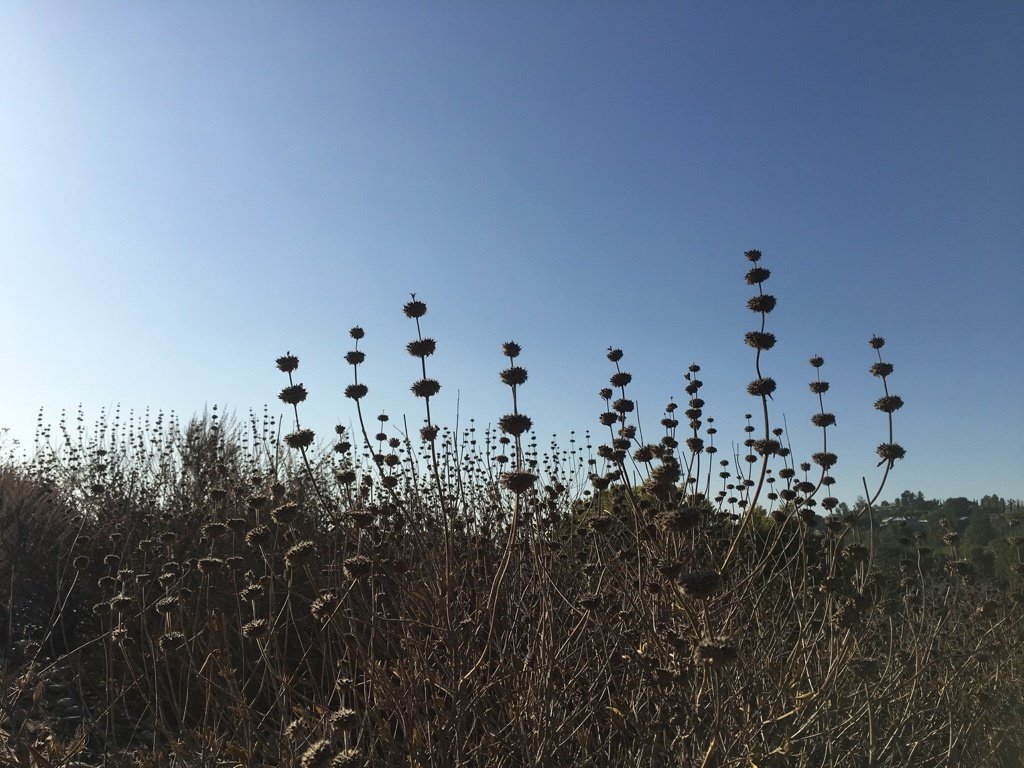
Discover how Black Sage supports Southern California’s coastal sage scrub habitats through drought‑tolerant traits, vital pollinator resources and ongoing restoration efforts that keep this native species thriving for generations. 🌿💙 #BlackSage #NativePlants
Plant Profile: Tarweed
 Photo courtesy of Keir Morse.
If you have ventured out on the Irvine Ranch Natural Landmarks, chances are you’ve encountered the yellow wildflower known as Tarweed (Deinandra fasciculata). Not to be confused with some of our common invasive species, this annual plant in the sunflower family is native to western North America and southwestern South America.
Tarweed gets its name from the sticky resin substance it produces, which resembles tar. The plant’s resin has several survival benefits. From reducing water loss to protecting against sun damage, the resin plays a vital role in the plant’s adaptation to survive throughout the dry season. Additionally, the resin acts as a deterrent for animals trying to eat it. Deterring grazers is especially important during the late summer when many plants have gone dormant.
You can spot Tarweed because it is one of the few plants that are still in bloom in the summer and fall. As a result of the resin, Tarweed remains in bloom long after the rainy season, with patches of bright yellow flowers found within the dry landscape. Tarweeds also have deep roots, allowing them to gather moisture deep in the soil, and small leaves, limiting water loss, making it a resilient choice for drought-prone environments.
 Photo courtesy of Keir Morse.
Since they are one of the only flowering plants late in the season, they are a crucial resource for pollinators like butterflies, bees and other beneficial insects. Plus, the seeds of tarweed are eaten by many native birds and small mammals, such as mourning doves, quails, mice, ground squirrels and more. Tarweed seeds were also historically used as food by the local indigenous people.
Given its prevalence in Southern California’s sage scrub and chaparral habitats, Irvine Ranch Conservancy (IRC) grows Tarweed at the Native Seed Farm to support conservation efforts across the Landmarks. Volunteers at the farm play a crucial role in nurturing and propagating Tarweed, ensuring its continuous presence for restoration projects undertaken by IRC.
 Photo courtesy of Keir Morse.
Related Posts