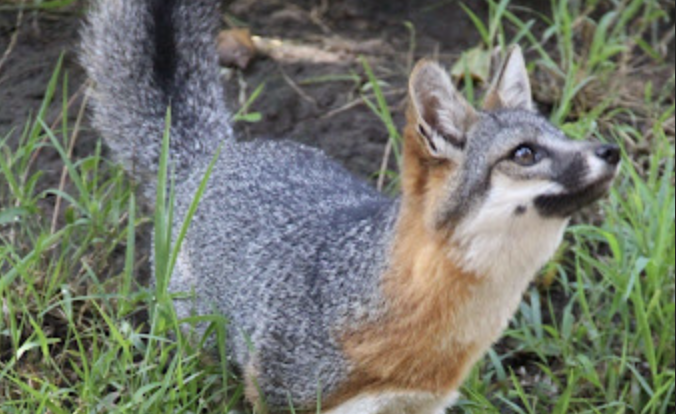
Discover the secretive gray fox, one of Orange County's most elusive wildlife species, and learn how this tree-climbing canid thrives throughout the Irvine Ranch Natural Landmarks. 🦊🌙 #WildlifeSpotlight #IrvineRanchConservancy
Wildlife Spotlight: Mexican Free-Tailed Bats

As Halloween creeps in with its usual ghosts and goblins, it’s time to spotlight one misunderstood symbol of the season: the bat. While they’re often described as spooky, scary creatures, bats are really just sweet, sky puppies.
One of the most common bat species in Orange County is the Mexican free-tailed bat (Tadarida brasiliensis). Found throughout the western United States, Mexico, Central America and northern South America, these bats roost in large numbers in caves, under bridges, in abandoned buildings or even attics. In Orange County, you can find a colony roosting under the “bat bridge” on Hicks Haul Road in OC Parks’ Red Rock Wilderness.
These bats prefer roosts near water, which attracts the insects they feast on. Active at night, Mexican free-tailed bats will hunt moths, flies, beetles, ants, plant bugs and mosquitoes. Consuming large quantities, a single colony can eat tons of insects in one night, making them known for their role in controlling insect populations, which benefits the local environment
The Mexican free-tailed bat’s name comes from their distinctive tail. Unlike most bats whose tails are tucked inside the uropatagium, a skin membrane between their hind legs and tail, the Mexican free-tailed bat’s tail extends beyond this membrane. Medium-sized and reddish to dark brown or gray, they are also recognizable by their broad, black ears, wrinkled lips and long, narrow wings. Plus, those wings are known to make them the fastest mammals on Earth, with speeds up to 100 mph.
Like other wildlife, bats can carry rabies. However, the idea that all bats carry disease is false, as fewer than 1% are typically infected. Bats are also naturally immune to many viruses and cancers. Still, with any wildlife, it is important to maintain a safe distance and avoid handling them. Never touch bats, even if they appear to be sick or injured.
Due to declining populations, the Mexican free-tailed bat is listed as a species of special concern in California. Conservation efforts are key to protecting this vital species and bats in general. With over 1,500 species in the world, bats make up about 20% of all known mammal species. These nocturnal critters are nature’s pest control, pollinators and seed dispersers, keeping ecosystems diverse and thriving.
Want to learn more? Join OC Parks for a special screening of The Invisible Mammal at Upper Newport Bay Nature Preserve. This feature documentary explores the crucial roles that bats play in our shared environment. Advance registration is required.
- Saturday, November 22 – Film Screening: The Invisible Mammal
Related Posts