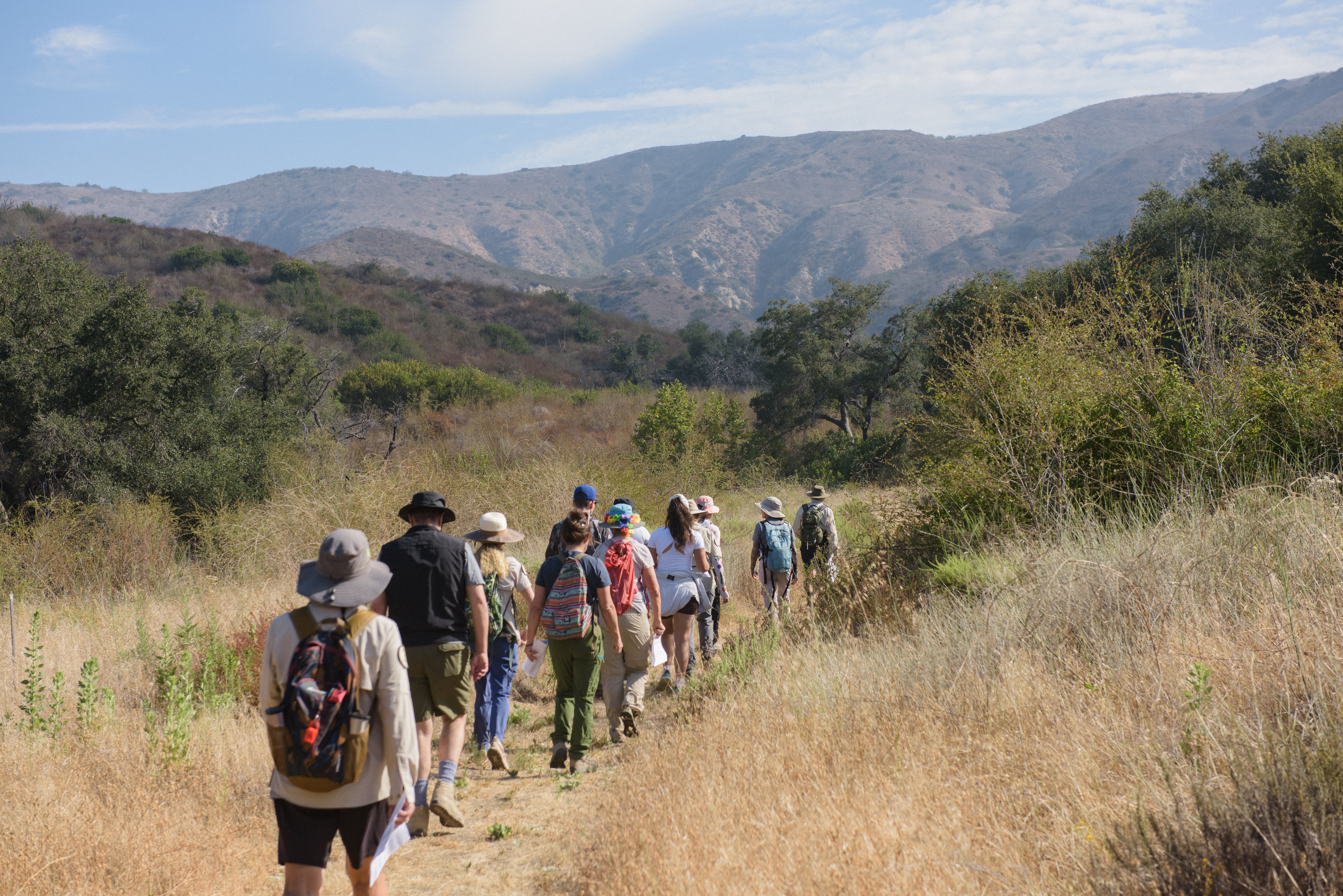
Estivation shows how Southern California wildlife and native plants survive summer heat through clever dormancy strategies that help ecosystems rest, adapt and thrive 🐸☀️ #Estivation #OCWildlands
Wildlife Spotlight: Crotch’s Bumble Bee

Among the many interesting pollinators found within the Irvine Ranch Natural Landmarks is the Crotch’s bumble bee (Bombus crotchii), a native species facing serious threats. Like many bee species, the Crotch’s bumble bee is classified as endangered due to habitat loss, urban development and agricultural expansion, making the popular sentiment, “Save The Bees,” all the more important.
This bumble bee is primarily found in California, with uncommon occasional sightings in Nevada and Baja California, Mexico. However, most observations occur specifically in Southern California, where the species thrives in grasslands and shrublands. Unlike many bumble bees that prefer cooler climates, the Crotch’s bumble bee favors hotter, drier environments with very little climatic differences, making our region an ideal place to live.
Unlike other bees that have outdoor hives, Crotch’s bumble bees typically nest underground, often repurposing abandoned rodent burrows or old bird nests in tree cavities. Since this species also does not migrate, it is believed that they spend the winter under leaf litter or soft soil similarly to behaviors of other bumblebees. As social insects, they live in nests or colonies that can number in the hundreds.
Although small, Crotch’s Bumble Bees are easy to recognize thanks to their distinctive coloring and facial shape. Queens and workers have black heads and faces with black markings on their abdomen, while males feature yellow hair on their faces and a distinctive black stripe on the middle of their abdomen.
Despite their small size, Crotch’s bumble bees’ impact on the ecosystem is quite the opposite. As pollinators, they visit a wide variety of native plants, including milkweed, lupines, sages, poppies, wild buckwheats and clarkia. Their foraging helps ensure seed production and genetic diversity, which supports other native plant and animal communities. Additionally, their ability to thrive in hot and dry conditions makes them especially valuable, as other pollinators may struggle in such environments. However, the Crotch’s bumble bee’s sensitivity to temperatures and narrow climatic tolerance means it depends heavily on the preservation of these specific habitats.
Unfortunately, the Crotch’s bumble bee has suffered a dramatic 98% population decline over recent decades. Climate change, especially, poses a growing threat to this climate-sensitive species. Additionally, many other factors such as habitat loss, urban development and agricultural expansion play a role in the decline. As a result, the species is listed as endangered by the International Union for Conservation of Nature (IUCN) and is currently a candidate for protection under the California Endangered Species Act.
The presence of Crotch’s bumble bees in the Landmarks is a reminder of the importance of conserving native habitats and promoting pollinator-friendly landscapes. By protecting their habitat, the community can help ensure that this species of bee, and the many species it supports, can continue to live and thrive in our local ecosystems.
Related Posts