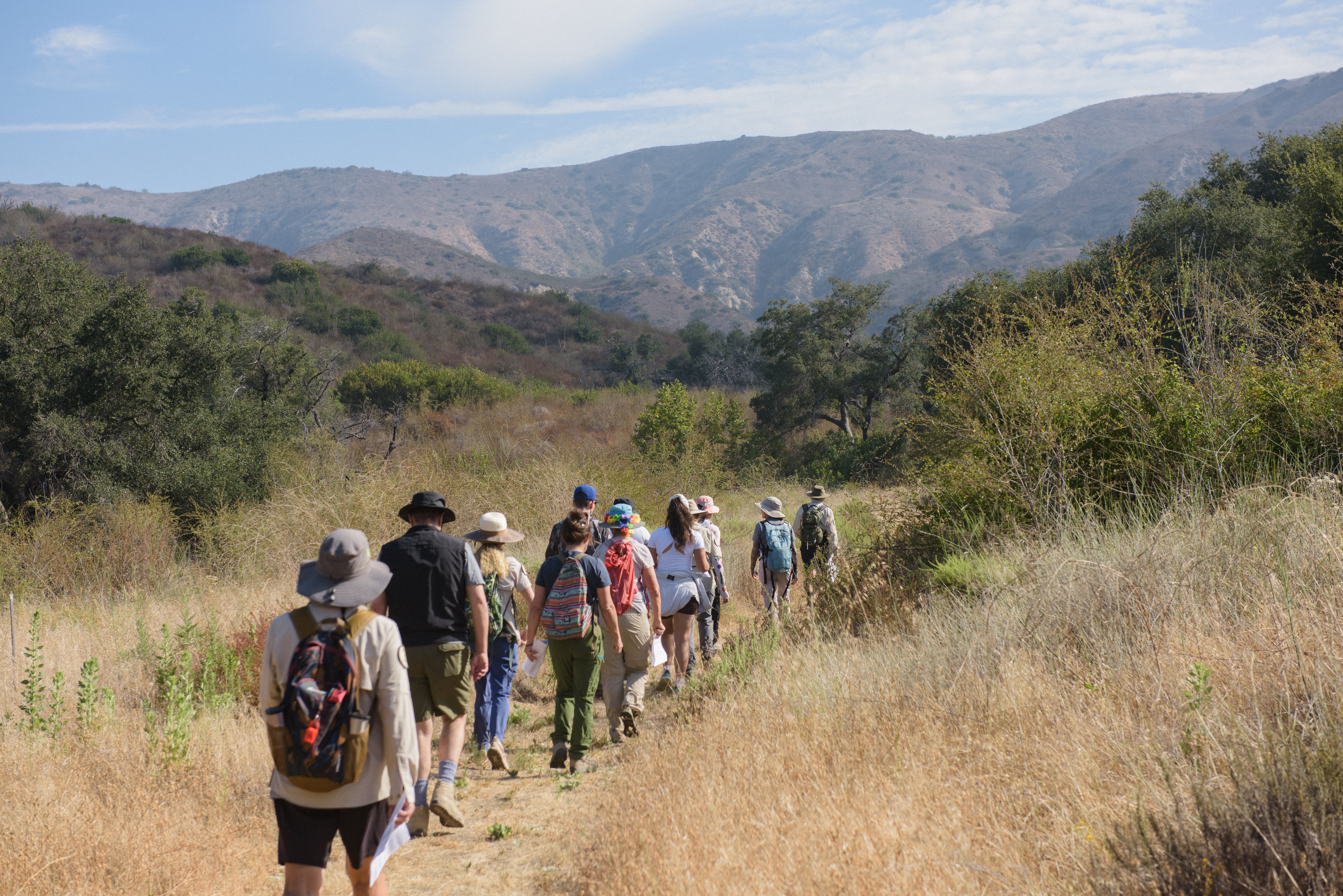
Estivation shows how Southern California wildlife and native plants survive summer heat through clever dormancy strategies that help ecosystems rest, adapt and thrive 🐸☀️ #Estivation #OCWildlands
Wildlife Spotlight: Cooper’s Hawk

The Irvine Ranch Natural Landmarks are home to a wide range of plant and animal species, some of which are familiar sightings without us knowing exactly what they are. One of those commonly seen throughout Orange County’s native wildlands is the Cooper’s hawk, a regular year-round resident in Southern California.
While the Landmarks are home to various hawk species, Cooper’s hawks can be identified by their size, shape, and distinctive features. The medium-sized hawks, smaller than the more commonly sighted red tails, are about the size of a crow. Compared to other hawks, Cooper’s hawks have short, rounded wings and elongated heads that extend past their wings. Adult Cooper’s hawks also have unique long tails with prominent white and black markings at the tips, making them easily distinguishable from other hawks.
Known for their stealth and efficiency in hunting, Cooper’s hawks primarily prey on smaller birds like doves and pigeons. They utilize their speed and agility to surprise their prey by flying low before swooping up. Because they feed on smaller birds, Cooper’s hawks have adapted to urban areas and are now easily spotted perched in the backyards of neighborhoods looking for potential prey near bird feeders.
Cooper’s Hawks are found across North America, from Southern Canada to Mexico. Some sightings have even been reported as far south as Guatemala and Belize. While typically seen in woodlands, they are adaptable to various environments, including forests and wetlands.
Irvine Ranch Conservancy (IRC) plays a vital role in protecting these animals in Orange County. During their nesting season, IRC closes off certain areas with sensitive nests to avoid disturbing the mother and her offspring. Additionally, IRC volunteers help monitor the nests so IRC can track population trends over time, gaining valuable insights into the overall well-being of the population. Right now, Cooper’s hawk populations are thriving.
So next time you are out on the Landmarks, see if you can spot a Cooper’s hawk!
Related Posts