
Southern California’s native seed dispersal strategies guide IRC’s adaptive harvesting methods to support biodiversity and large‑scale restoration 🌾🪴 #NativePlants #HabitatRestoration
Seeding Season at Irvine Ranch Conservancy

Southern California’s rainy season typically stretches from late fall through early spring, with December, January and February bringing the heaviest rainfall. With the season upon us, the staff at Irvine Ranch Conservancy (IRC) is busy preparing for seeding. Whether at restoration project sites across the wildlands or through traditional planting at the Native Seed Farm, IRC staff are getting seed material ready to plant with various tricks and techniques.
Seeding in the Wildlands
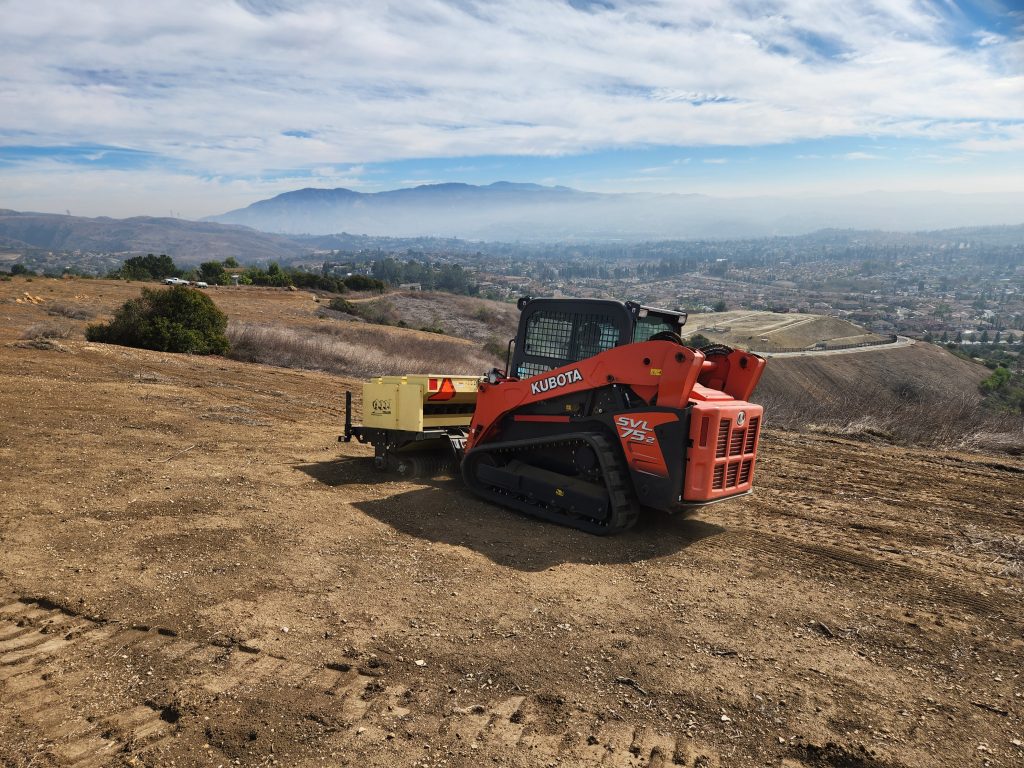
Restoration seeding preparation requires close attention to weather conditions. That’s because when IRC staff choose to seed typically depends on when the next rainstorm takes place, which, as we know, isn’t always the most predictable. Since timing is everything, staff must be ready to act quickly when rain is forecasted. If rainfall is expected within a few days, seeds are sown into the ground immediately so the moisture can help them settle into the soil and germinate, or begin to grow, after a period of dormancy. Two main techniques are used to evenly distribute the seed material across targeted areas:
- Mechanical Method: A tractor-mounted machine, the Imprinter, creates furrows, drops seeds evenly and covers them with soil. This method produces higher germination rates and is generally preferred.
- Manual Method: In steep or inaccessible terrain, staff will hand-disperse seeds by hand, then rake and press them into the soil. While effective, this approach carries more challenges as seeds may fail to germinate if left too close to the surface.
Seeding at the Farm
Seeding at the Native Seed Farm is more complex. With its limited space, it is more important to have higher germination success rates than out in the wildlands. The stored seeds in the seed material often enter dormancy and require treatment before traditional planting. Dormancy is a natural process in seeds, but when planted in a controlled environment, it must be broken to ensure successful germination. Many plants can only sprout under very particular conditions, and the seeding techniques used offer insight into the environments that shaped them. IRC staff use several techniques at the Native Seed Farm:
- Mechanical Scarification: Physically scratching or breaking the hard exterior seed coat softens it, allowing water and gases to penetrate. This is the easiest and most common technique for breaking dormant seeds.
- Fire/Smoke Treatment: Many native annuals are fire-following species, meaning they thrive after a wildfire. These species either need heat to crack open or chemicals in smoke to stimulate germination. Staff mimic wildfire conditions by heating seeds to 250°F. After, they will collect the mineral-rich ash and mix it into the soil. This method is used for species like Parry’s Phacelia (Phacelia parryi).
- Heat Treatment: Depending on the species, IRC staff use hot water to trigger germination. Seeds with thick coats are soaked in 170°F water to help them soften for planting. This is a common practice for Aurola lupine (Lupinus succulentus) seeds.
- Chemical Scarification: Some seeds naturally take time to break down in the wild, but chemical treatments can accelerate the process. Acids (e.g., sulfuric acid or vinegar) weaken seed coats, simulating natural digestive processes. Growth regulators like gibberellic acid (GA3) can also accelerate germination. Vinegarweed (Trichostema lanceolatum) is a prime example of this.
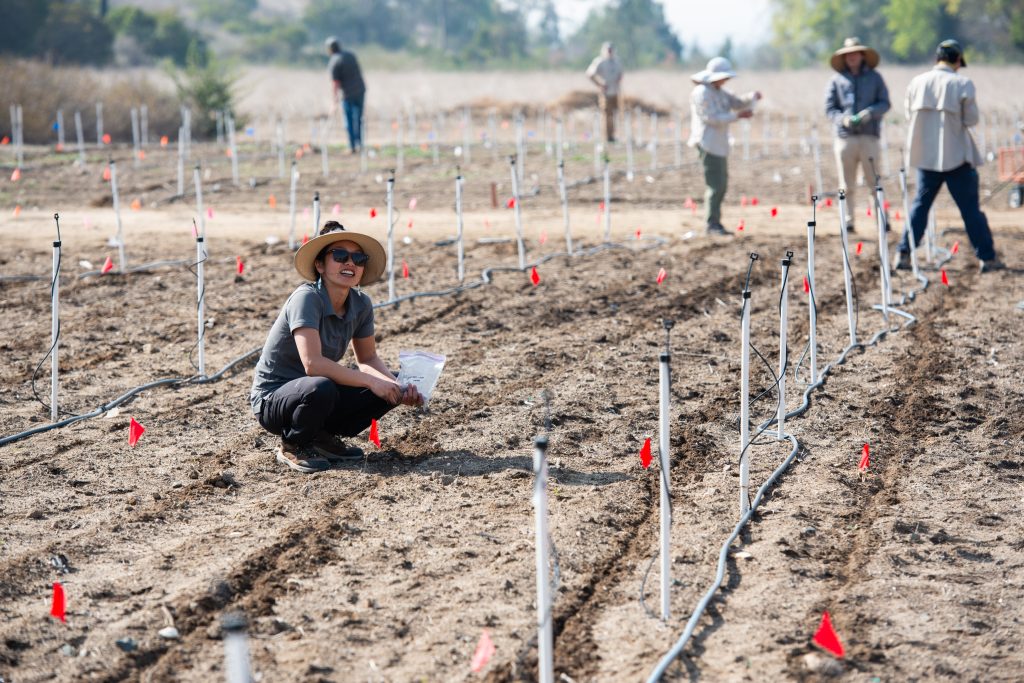
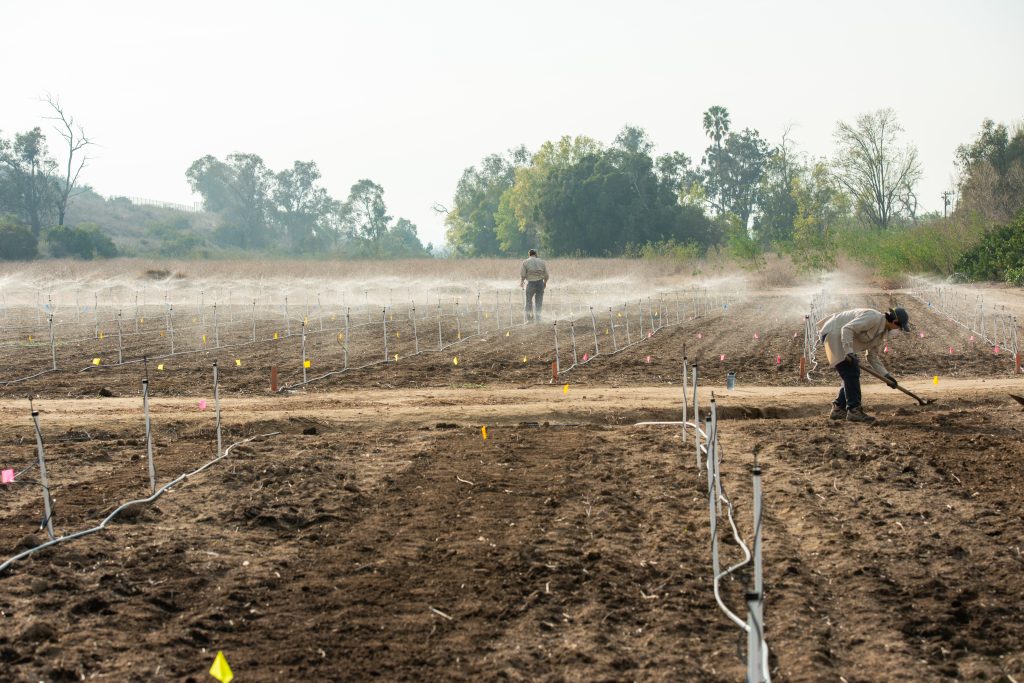
After treatment, the team prepares plots by creating shallow furrows about a quarter inch deep. Seeds are then planted by hand, with help from IRC staff across all departments and program areas. Finally, the seeds are covered with soil, watered and left to sprout.
Whether in the wildlands or at the Native Seed Farm, IRC’s diverse seeding techniques reflect the ever-changing nature of Southern California’s habitats and the careful work required to restore them.
Related Posts


