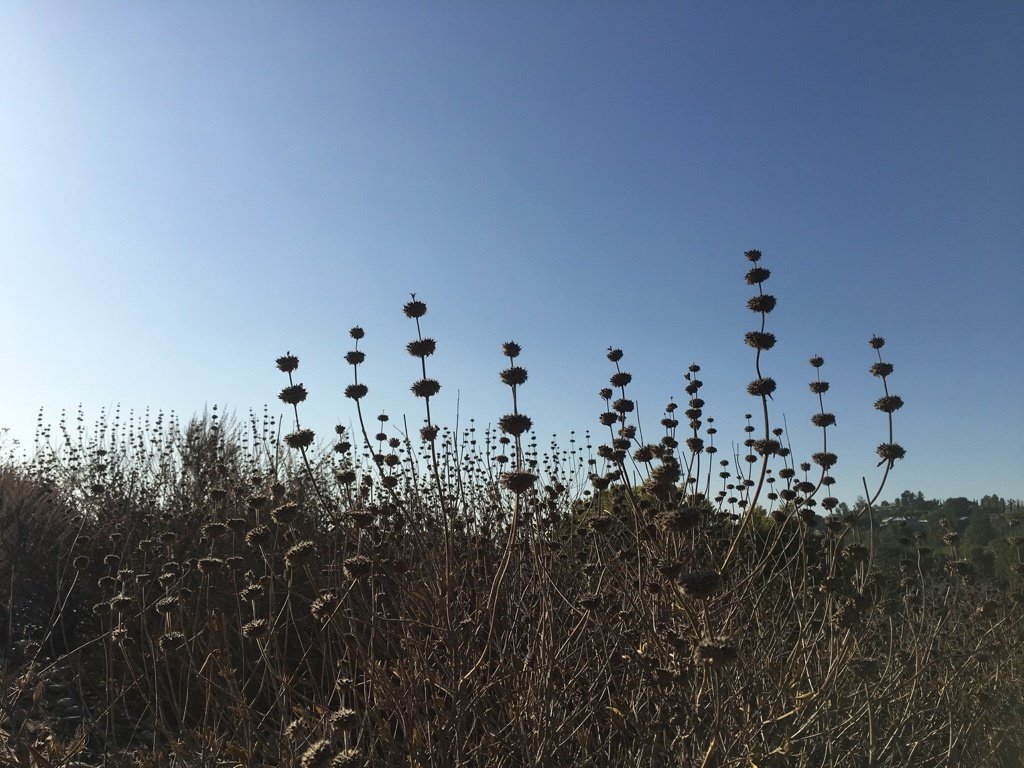
Discover how Black Sage supports Southern California’s coastal sage scrub habitats through drought‑tolerant traits, vital pollinator resources and ongoing restoration efforts that keep this native species thriving for generations. 🌿💙 #BlackSage #NativePlants
Plant Profile: Coyote Brush
 Coyote Brush. Photo courtesy of Keir Morse.
While exploring the Irvine Ranch Natural Landmarks, you may have come across the distinctive coyote brush (Baccharis pilularis), a native plant commonly seen in our region. But do you know why this plant is such an important member of our ecosystem?
Characterized by its small evergreen leaves and abundant white and yellow flowers, coyote brush is a perennial shrub that can be found along the West Coast from Washington to Baja California. Growing anywhere from two to ten feet in height and potentially reaching 12 feet in width, coyote brush is a large shrub that is ideal for bank stabilization due to its short height and wide spread root system. Thriving in various soil types, this drought-adapted plant is considered low-water and fire-resistant, thanks to the waxy, fire-retardant chemical in its leaves.
 Coyote Brush. Photo courtesy of Keir Morse.
Coyote brush also plays a crucial role in supporting wildlife habitats. With a flowering season from August to December, it serves as a valuable nectar source for native wasps, butterflies and flies. Additionally, it offers cover and a nesting site for a wide range of wildlife, including birds, mammals and insects
Adaptable and resilient, coyote brush can be found in diverse environments such as bluffs, hills, foothills, and flats with chaparral, coastal sage scrub or grasslands habitats.
Next time you explore the Landmarks, be sure to keep an eye out for the valuable coyote brush and appreciate its significance in our local community.
Related Posts