
The Irvine Ranch Natural Landmarks are full of important habitats and native wildlife and it's…
20th Anniversary Program Spotlight: Planning and Infrastructure

Founded two decades ago, Irvine Ranch Conservancy (IRC) has been dedicated to protecting, restoring and enhancing tens of thousands of acres of wildlands across Southern California. This mission wouldn’t be possible to undertake without access to the land. That’s why IRC’s Planning and Infrastructure team is an essential component of the organization. The specialized group is responsible for designing, building and maintaining the systems that make these lands accessible for everyone, from park rangers to restoration teams to the public.
The wildlands can be remote and expansive, without a thoughtfully planned and maintained network of roads, trails, signage and more, many areas would remain unreachable. Over the past 20 years, IRC has led the development of dozens of miles of trails and fencing, numerous bridges and gates, scenic viewing areas and hundreds of informational signs. These features enable teams to conduct vital restoration or research, while allowing the community to explore the wilderness safely and minimize environmental impact. IRC plans and develops infrastructure on the wildlands with both humans and wildlife in mind.
Over the past 20 years, IRC has led the development of:
- 31 miles of new single-track trails
- 26 miles of fencing utilizing different materials
- 30 bridges, ranging from 16 ft to 85 ft (up to an 8,000-pound vehicle load)
- 116 gates with a specifically designed multi-padlock system (2 to 16 locks)
- 4 scenic viewing areas, two with 360-degree viewing areas
- Over 700 informational signs created by IRC’s operating sign shop
Infrastructure development begins with thoughtful design. When a new wildland area comes under IRC’s management, the Planning and Infrastructure team assesses what’s needed based on whether the area will be open to the public or reserved for restoration and research. Restricted areas may only require access roads for land managers and park rangers, while public areas often need trails, parking lots, staging zones, fences, signs and potential viewing areas. The team also evaluates the overall habitat and terrain to determine if bridges or other structures are necessary to reach key points of interest safely.
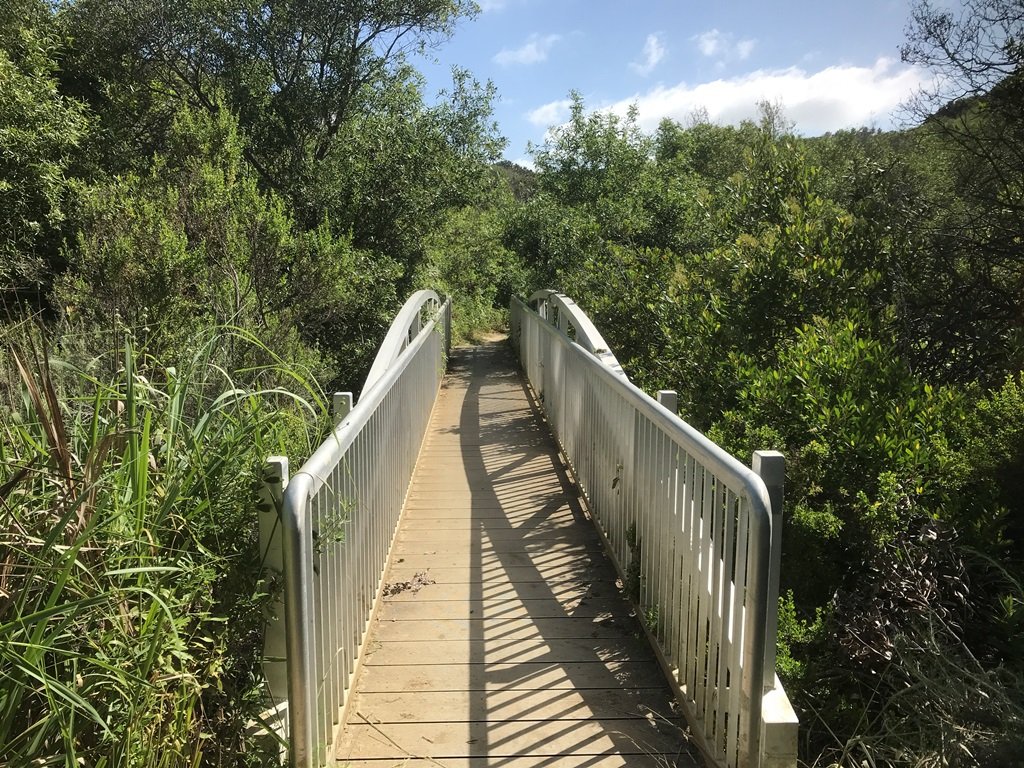
During the planning process, material selection is critical to the success and longevity of these projects. For example, a lot of thought goes into the material selection for bridges, which are mostly made from wood; however, depending on the conditions of the area, the team needs to be creative in their choice. In the City of Newport Beach’s Buck Gully, where conditions are wet, lightweight aluminum bridges were picked for durability and water resistance. On the other hand, in OC Parks’ Laguna Coast Wilderness Park, a 40-foot-high, 30-foot-wide trail gap was bridged using fiberglass, the only bridge in Orange County constructed from that material. This weatherproof material was chosen for its aesthetic appeal and potential for community engagement, as 1,600 individual pieces were assembled to complete the structure.
The next step, the building phase, is no easy feat as constructing infrastructure in wildlands is challenging. The terrain often limits access for crews needing heavy machinery and equipment, requiring innovative solutions. In remote valleys, IRC’s expert team has used helicopters to install bridges and other infrastructure. During this process, every project is executed with safety and precision, ensuring that the land becomes more accessible without compromising its integrity.
Maintenance is fundamental for IRC’s continued success. These efforts ensure that both people and wildlife can safely coexist. Well-maintained trails help guide visitors, making it less likely for people to wander into sensitive habitats. Overall, the team oversees more than 200 miles of natural surface roads, performing tasks such as mowing and trimming trails, repairing erosion damage and fixing fences. In addition, the team is in charge of inspecting all other infrastructure components like bridges, staging areas, waterlines for wildlife troughs and more.
“There’s an incredible sense of pride in what we’ve built over the past 20 years. No other program in Orange County has developed more trails or installed more infrastructure than IRC, “ said Adam Maywhort, Planning and Infrastructure Program Manager. “From bridges spanning remote canyons to miles of carefully planned trails and roads, our team has transformed access to wildlands in ways that we never thought were possible, connecting more and more people to nature.”
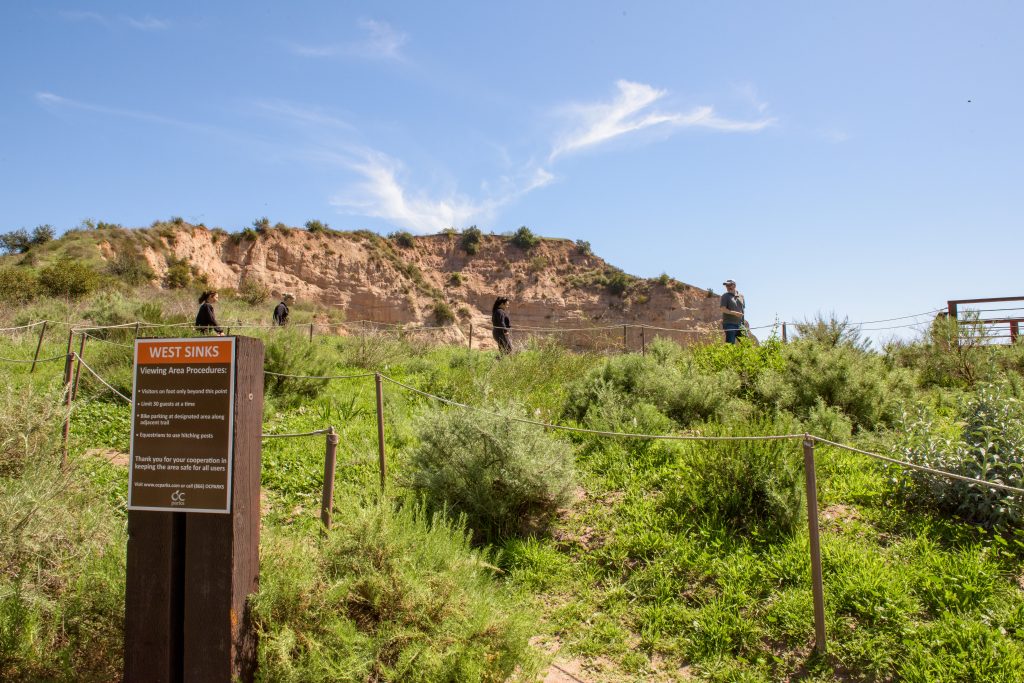
Thanks to the IRC’s Planning and Infrastructure team, several “hidden gems” or local natural wonders are now accessible and safe for the public to enjoy. One such example is the OC Parks’ Limestone Canyon Nature Preserve West Sinks viewing area, a dramatic geological feature that was once difficult to reach. IRC not only made it accessible with added trails but also designed and developed a second viewing area on the east side, expanding opportunities for visitors to experience “Orange County’s mini–Grand Canyon.” Also in Limestone Canyon, an old access road was converted into a single-track trail leading to Dripping Springs, turning a wide, utilitarian road into a nature-immersed experience. Additionally, Buck Gully underwent a significant transformation from a steep, eroding creekside, where people would slide down, jump off edges and climb to the opposite bank, to a three-mile trail system that balances public access with habitat preservation. IRC installed four aluminum bridges and created safer pathways, allowing the once-hidden and degraded area to become a beloved destination that can now be enjoyed safely by the community.
These projects are more than infrastructure; they’re invitations to explore, connect and appreciate the wildlands in ways that wouldn’t be possible without IRC’s commitment.
Stay tuned this year for more ways to help celebrate 20 years of stewardship with IRC!
Related Posts


